
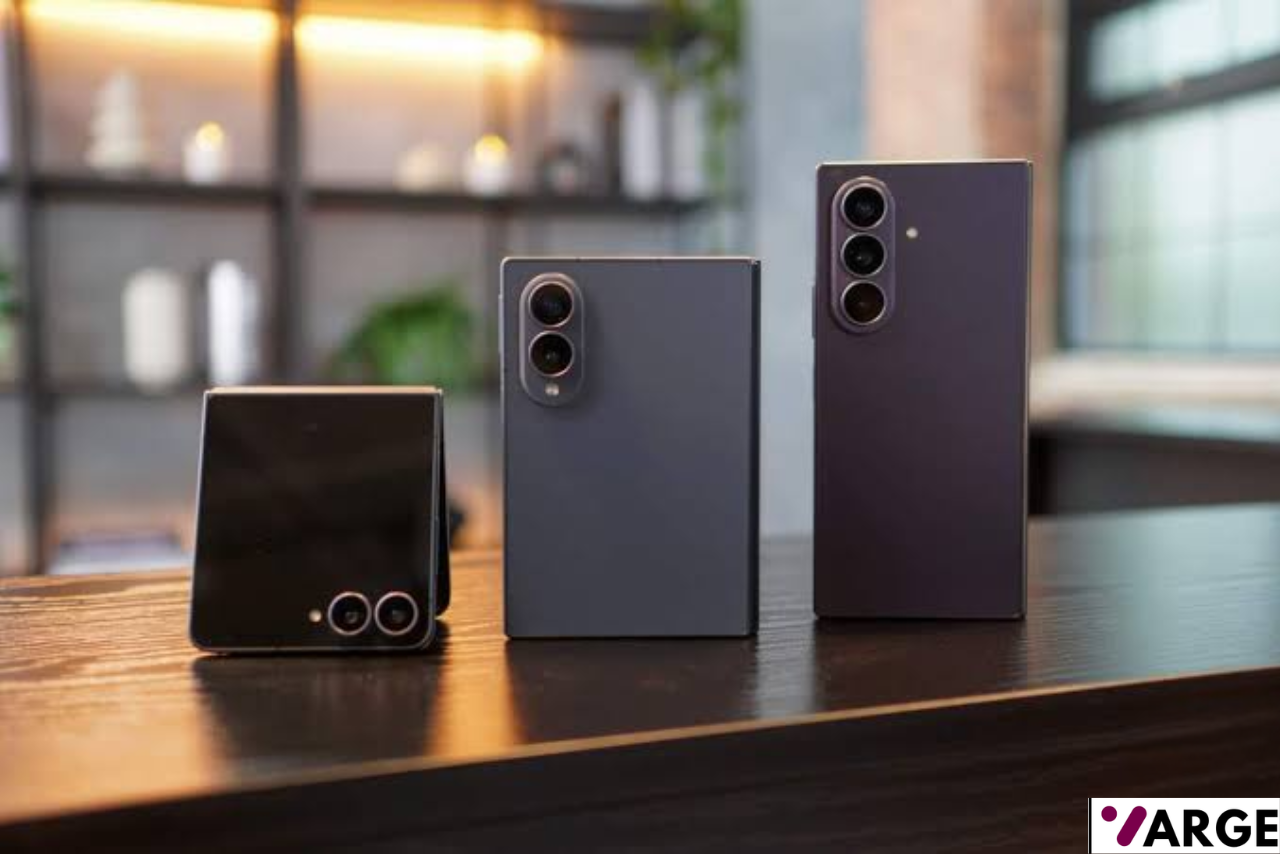
Samsung has spent the better part of a decade running an extended experiment on foldable phones, and its 2026 lineup looks like the company has finally landed on the answer. After years of oscillating between an oversized book-style fold and a pocket-sized flip — with a brief detour into a three-panel folding phone that never quite convinced anyone — Samsung has released three new devices for 2026. Of the trio, one stands out as a genuinely compelling rethink of what a folding phone should be: the Galaxy Z Fold 8.
A Different Shape, A Different Purpose
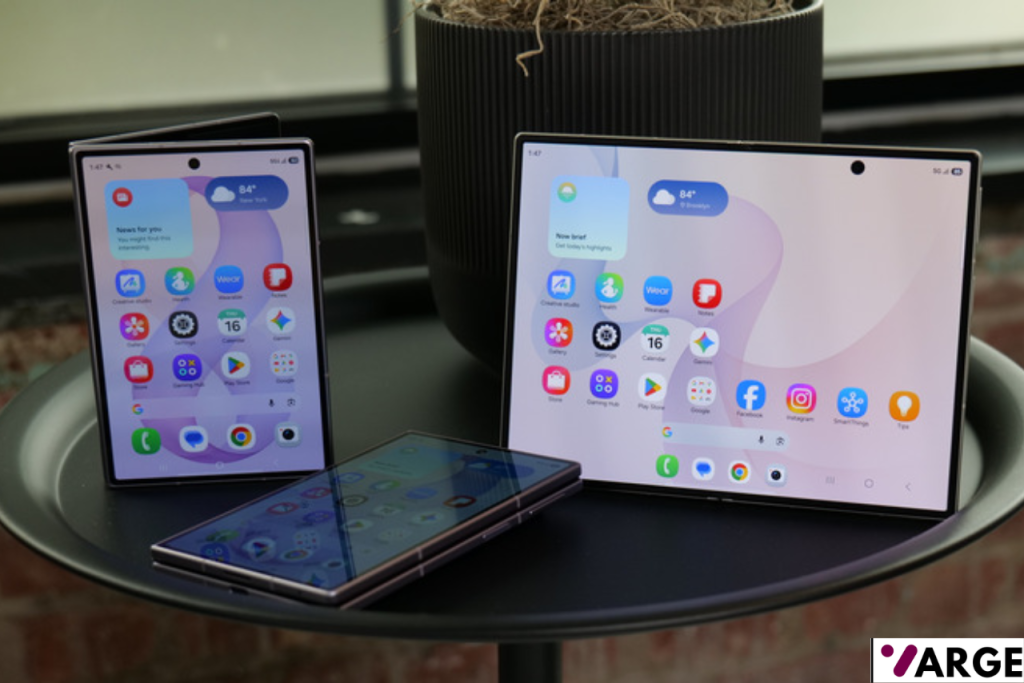
For years, the biggest knock against Samsung’s book-style foldables wasn’t really about hinges, creases, or durability — it was about proportions. When unfolded, earlier Fold models opened into a nearly square display, a shape that never quite matched how people actually use their phones. Scrolling through vertically-oriented apps, watching video, or browsing a typical website all suffered on a screen that was neither tall enough nor wide enough to do any of those things comfortably. Movies in particular looked worse letterboxed on a square panel than they did on an ordinary phone screen.
The Galaxy Z Fold 8 breaks from that formula. Instead of the roughly square interior display Samsung has used since the original Fold, the new model opens up into a 7.6-inch screen with a 4:3 aspect ratio — the same ratio Apple has long used for the iPad. That’s not a coincidence. Held in portrait mode, the wider proportions make web pages far more usable and cut down dramatically on scrolling. Turned sideways, it becomes a noticeably better screen for watching video. It’s a shape better suited to actual media consumption than anything Samsung has previously put inside a folding phone.
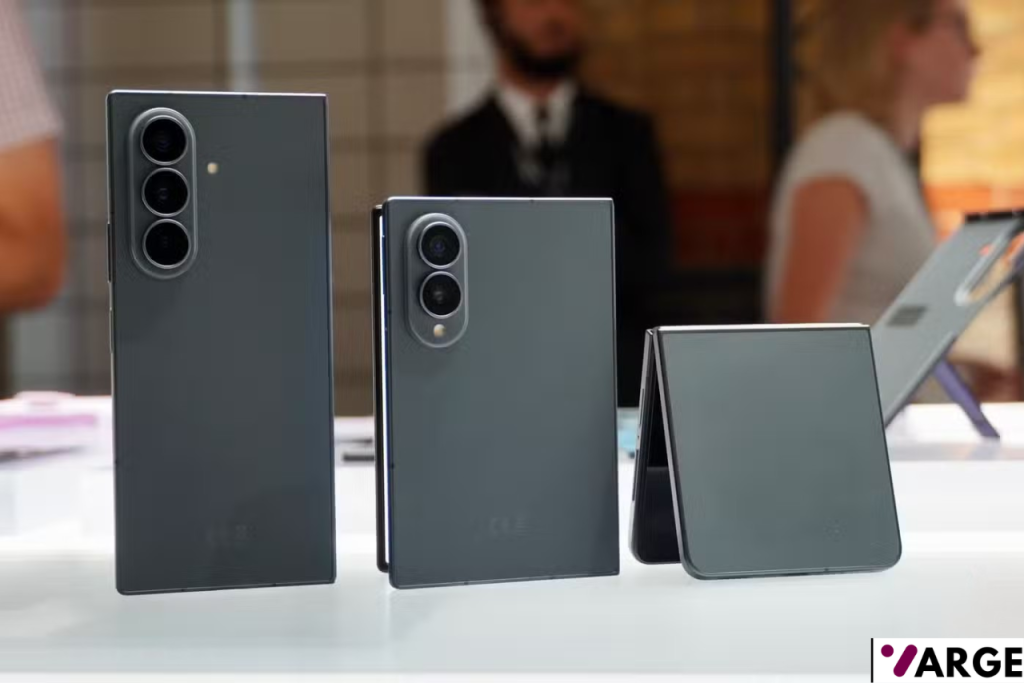
The timing is notable, too. Apple is widely expected to release its own book-style foldable, reportedly dubbed the iPhone Ultra, sometime later in 2026 — and industry chatter suggests it may adopt a similar 4:3 display shape. By moving first, Samsung gets to stake its claim on that format months ahead of Apple’s expected entry.
Beyond the screen shape, the Z Fold 8 benefits from several generations of refinement elsewhere. It’s slimmer than earlier Fold models, making it genuinely pocketable in a way the original versions weren’t, while a 5.5-inch external cover display is large enough to use for everyday tasks without opening the phone. It’s positioned as the more affordable of Samsung’s two book-style folds this year, sitting below the Ultra model and giving up some camera hardware in exchange for a lower price.
The “Ultra” Question
Samsung began dropping hints about an “Ultra” folding phone well before the Galaxy Z Flip 7 launched, and speculation ran high that a true Ultra variant was imminent. That didn’t happen at the time — instead, it appears Samsung was simply planting the idea in people’s minds ahead of this year’s release.
Now that the Galaxy Z Fold 8 Ultra has actually arrived, the “Ultra” branding feels like a stretch. Compared to the standard Z Fold 8, the Ultra version brings a somewhat larger battery like the Unihertz 8849 Pro, faster charging, a slightly improved ultrawide camera, and a brighter display — solid but incremental upgrades rather than a wholesale reinvention. Both phones run on the same Snapdragon 8 Elite Gen 5 for Galaxy chipset, meaning there’s no meaningful performance gap between them.
The Ultra does carry the best camera system and biggest battery in the Z family, and it’s priced accordingly at £1,899 — a figure that puts it firmly in flagship-plus territory. Whether the improvements justify wearing the same “Ultra” badge as Samsung’s other top-tier products, including the Galaxy S26 Ultra and Watch Ultra, is a fair question. On paper, this looks more like a modest refinement of last year’s Fold than a genuine step up to a new tier.
The Flip Keeps Its Charm, With Modest Upgrades
Samsung’s clamshell-style foldable, the Galaxy Z Flip 8, follows a similar pattern to the Fold Ultra: it’s an evolution rather than a reinvention. Compared to last year’s Z Flip 7, the changes are relatively minor — most notably faster charging, which should help offset the fact that its 4,300mAh battery has never been known for lasting all that long. The new model is also slightly thinner and lighter, though the difference is subtle enough that it’s hard to notice side-by-side with its predecessor. A new pink colorway is likely to be a draw for buyers who care as much about style as spec sheets.
What continues to set the Flip apart from Samsung’s book-style folds is its practicality. It retains the nostalgic appeal of classic clamshell phones while folding down small enough to disappear into a pocket or bag, all while unfolding into a full 6.9-inch display that behaves much like a conventional phone screen once open.
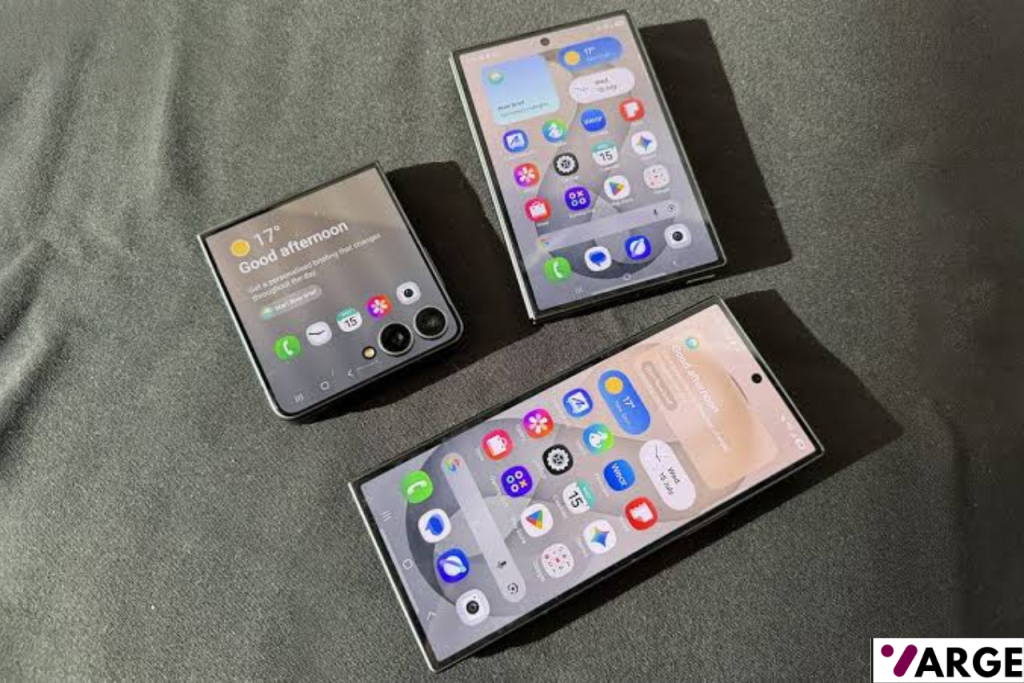
The more meaningful upgrade this year is software, not hardware: Samsung has significantly expanded what the cover display can do. Previously, that outer screen was limited to things like music controls, notifications, and small widgets — an area where rivals such as Motorola had pulled ahead by offering full apps on their own cover screens. Samsung has now closed that gap, letting Flip 8 owners run navigation, hail a rideshare, watch YouTube, and use other full apps without ever opening the phone.
That said, if Samsung extends those same cover-screen software features to the Galaxy Z Flip 7 via an update — which seems plausible — the practical gap between old and new narrows considerably. With the Flip 8 priced at £1,149, and the Flip 7 already available for as little as £899 in some retail deals, plenty of buyers may find the older model the smarter purchase, especially if it eventually gains the same software tricks.
Three Phones, One Clear Standout
Taken together, Samsung’s 2026 foldable lineup tells a fairly clear story: two of the three new phones are safe, iterative updates, while the third represents a genuine attempt to solve a problem that’s dogged folding phones since the format began.
The Galaxy Z Fold 8 Ultra and Galaxy Z Flip 8 both nudge their predecessors forward with faster charging, marginally better batteries, and small camera or display tweaks — welcome, but not transformative. Given how close last year’s models remain in real-world performance, and given that older models are already discounted, it wouldn’t be surprising if a meaningful share of buyers opt to save money by picking up a Z Fold 8 Ultra’s predecessor equivalent or a discounted Flip 7 instead of paying full price for this year’s refinements.
The Galaxy Z Fold 8 is the outlier. By abandoning the roughly square interior display that has defined Samsung’s book-style foldables since their debut, and adopting a 4:3 ratio that mirrors Apple’s iPad, Samsung has addressed the single biggest usability complaint leveled at the format for years. It’s a phone with a clearer sense of purpose than its predecessors — less compromised for everyday browsing and media, and priced below its Ultra sibling despite offering the more interesting upgrade.
Whether that’s enough to meaningfully dent Apple’s expected entry into the foldable market later this year remains to be seen. But Samsung has clearly used its head start wisely, launching a phone shaped — quite literally — around solving the problem that’s held folding phones back, months before Apple gets the chance to try its own version of the same idea. After years of testing extremes with its foldable lineup, Samsung finally seems to have landed on a shape that fits.