

Best Deal Today
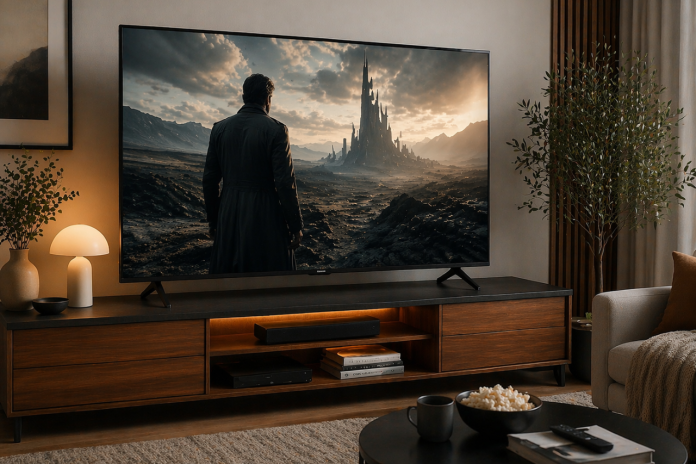
The Samsung 65Q7F is an entry-level QLED TV that’s part of Samsung’s 2025 QLED lineup, sitting below more premium models like the Q8F. Samsung’s premium models provide terrific value for money, but they tend to be pricier compared to models from TCL and Hisense.
In 2025, the company is offering the Q7F lineup, enabling people to experience its QLED technology at an affordable price point. This TV is the first entry point from Samsung targeting customers looking to upgrade to a QLED TV on a lean budget, with a price tag low enough to compete with more affordable brands out there. Even with the low price tag, Samsung packs great software and enhancements into this lineup to enhance its appeal.
If you’ve kept tabs on the latest Samsung QLED TVs, you must have realized that they’re brighter, more colorful panels that use metallic quantum dot technology to enhance screen performance. They’re simply a continuation of Samsung’s SUHD series that launched a few years ago. Does all this technology make a difference?
It makes these newer TVs pretty phenomenal, but they might not have the black-level chops of an OLED, but they have lots of brightness that makes colors pop like never before. And, while Samsung’s line-up of QLEDs might not be the best TVs this year, there’s no doubt that they pack stellar performance under the hood at a very reasonable price.
Samsung 65Q7F Specifications
- Display Type: QLED (Quantum Dot LCD)
- Resolution: 4K (3840 x 2160)
- Refresh Rate: 60Hz
- HDR Support: HDR10, HDR10+
- Dolby Vision: No
- Processor: Q4 AI Processor
- Smart OS: Tizen
- Audio: 20W (2.0 channel)
- HDMI: Standard (No HDMI 2.1)
Design
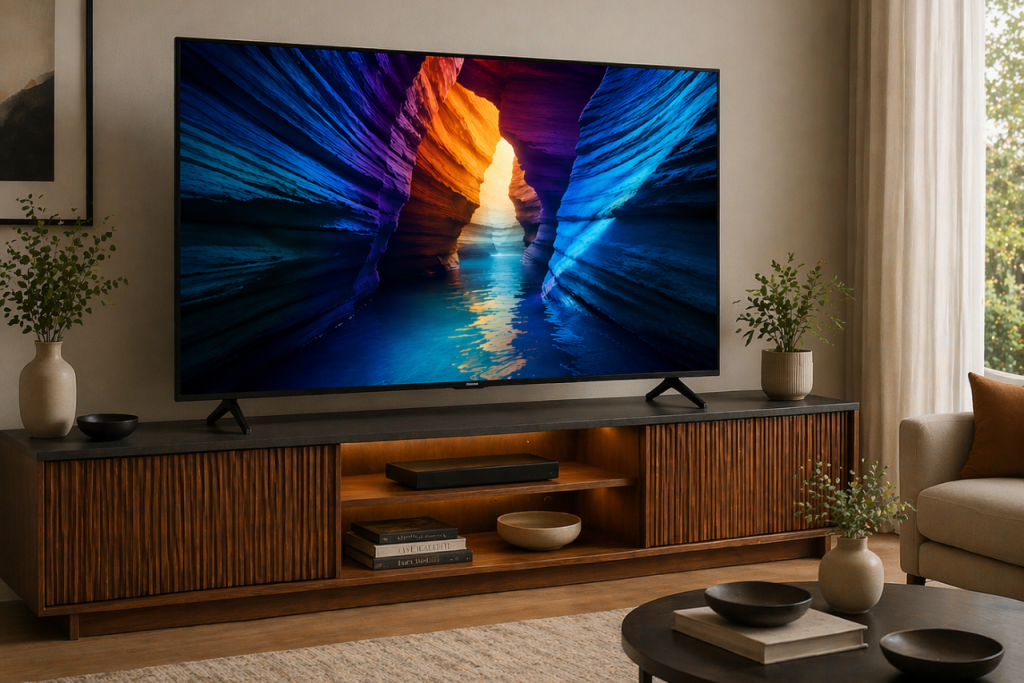
Samsung’s introductory QLED screen, Q7F, comes in various sizes: starting with a 43-inch model and stretching to a massive 98-inch version. Our review model is the middle brother, the 65-inch version – Samsung 65Q7F, but all the iterations share the same design aesthetic, namely a uniformly flat rear and slim bezels. It doesn’t raise eyebrows in terms of looks, but the 65Q7F is functional by design and better for it.
Samsung focuses on making the setup process very simple for its TVs, and that applies to the Q7F model. Setup is pretty straightforward; you will take mere minutes from unboxing to powering it up. The pair of plastic feet easily snap into place and are surprisingly sturdy, so you won’t be worried about your TV falling off the stand. The build quality is excellent as well.
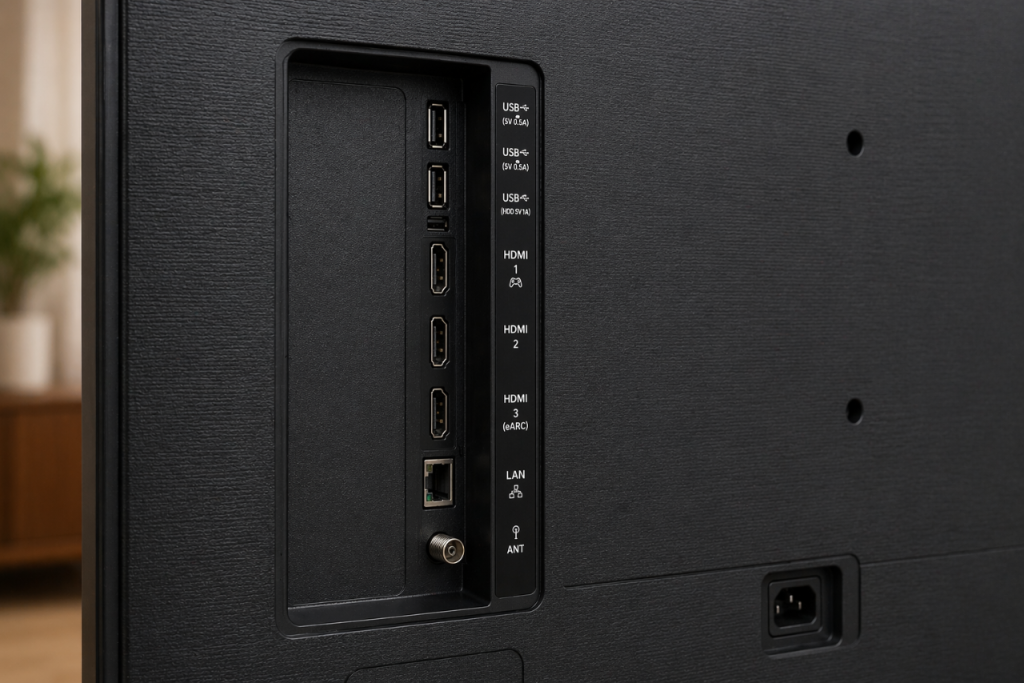
Connectivity is good, but not as extensive as models higher up. You get three HDMI inputs, all maxed at 60Hz, so no blazing-fast gaming refresh rates here; high-end models come with up to four HDMI ports locked at 120Hz and a few gaming enhancements. Others include USB, Ethernet, terrestrial/satellite aerial, and a CI slot, alongside Wi-Fi 5 and Bluetooth 5.3 for wireless connections.
Picture Quality
As mentioned, the Samsung 65Q7F is an entry-level QLED model, so you don’t expect full array local dimming on the Q7F like the step-up models in Samsung’s lineup. However, it’s in line with what you’d expect from a budget TV using an entry-level backlight as it does. At its core, it’s still a QLED TV, so you benefit from a lot of color compared to many other TVs in this price range that use inferior display technology.
The Samsung 65Q7F delivers good contrast, obviously not as good as it would be on top-tier models like the Panasonic 55Z95BP OLED, but then again, the price you’re paying for the Q7F makes it justified. So while it doesn’t have the deepest blacks, on the flip side, you’re not going to struggle with the blooming effect that’s evident on some of the cheaper full-array local dimming TVs that lack enough dimming zones.
As with all entry-level tech, the Samsung Q7F comes with a few weaknesses worth highlighting here: peak brightness. While the TV does have HDR support, it doesn’t get very bright to deliver the king of brightness you’d expect from HDR. SDR content, picture quality is very decent. It makes for a good TV for watching broadcasts, and TVs as the colors are enough and the motion is smooth on this 60Hz panel.
Viewing angles are narrow, but again, most TVs in this price range aren’t going to have excellent viewing angles. It uses a VA panel, which means when you go off-angle, you start to lose contrast and color.
Gaming is fine at this price point, as long as you stick to playing in SDR. The Q7F has really low input lag, which nearly matches Samsung’s premium models, in 60Hz. That’s pretty impressive. Also on board is Samsung’s game mode, delivering easy access to different presets to fine-tune your gaming experience. There’s no VRR support, so AMD FreeSync and Nvidia G-Sync for PC games are off the table, a painful omission but not a deal-breaker at this price point.
Smart Platform & Features
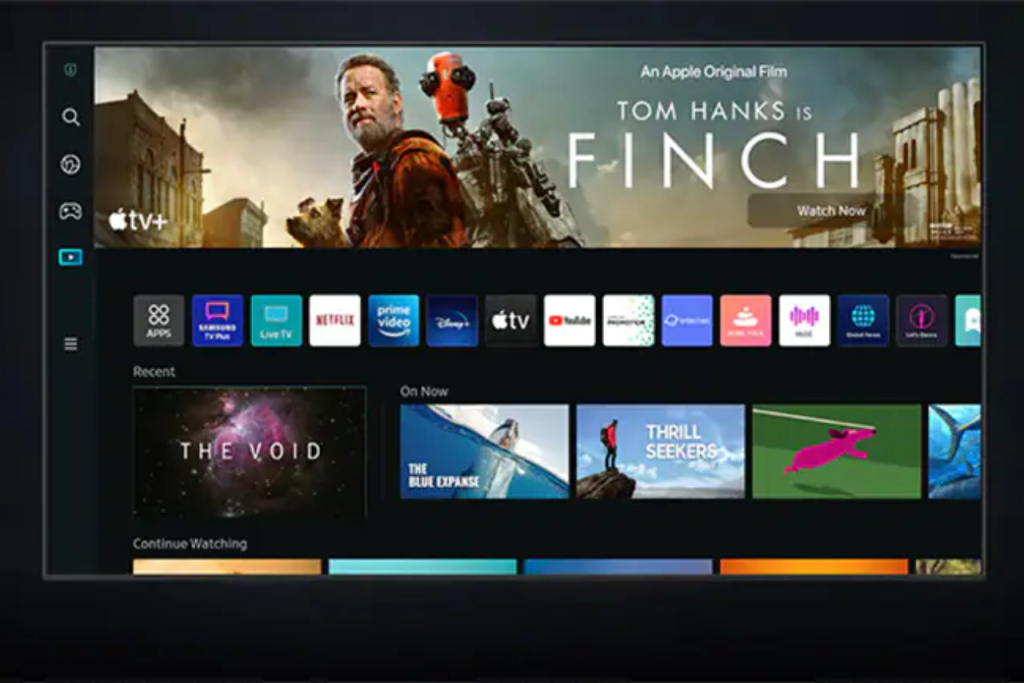
This TV runs on Samsung’s own smart platform, Tizen. The 65Q7F’s entire experience is built around this software, and even if you’re planning on pairing this TV with the best streaming device to match your viewing habits, you’ll still interact with its interface now and then, especially when you need to swap inputs or adjust settings.
On one hand, Tizen OS offers access to most major streaming services you’re likely to want. This is important because I suspect most folks shopping in the Q7F’s price range will want to rely on their smart TV’s streaming features on a daily basis.
On the other hand, the Tizen experience isn’t flawless. There are huge ads that take large portions of the home screen, and it takes several extra steps to execute basic functions due to the software’s meandering layout. Samsung uses the Q4 AI process in the Q7F, which is capable of upscaling up to 4K resolution, even if the source quality is lower resolution.
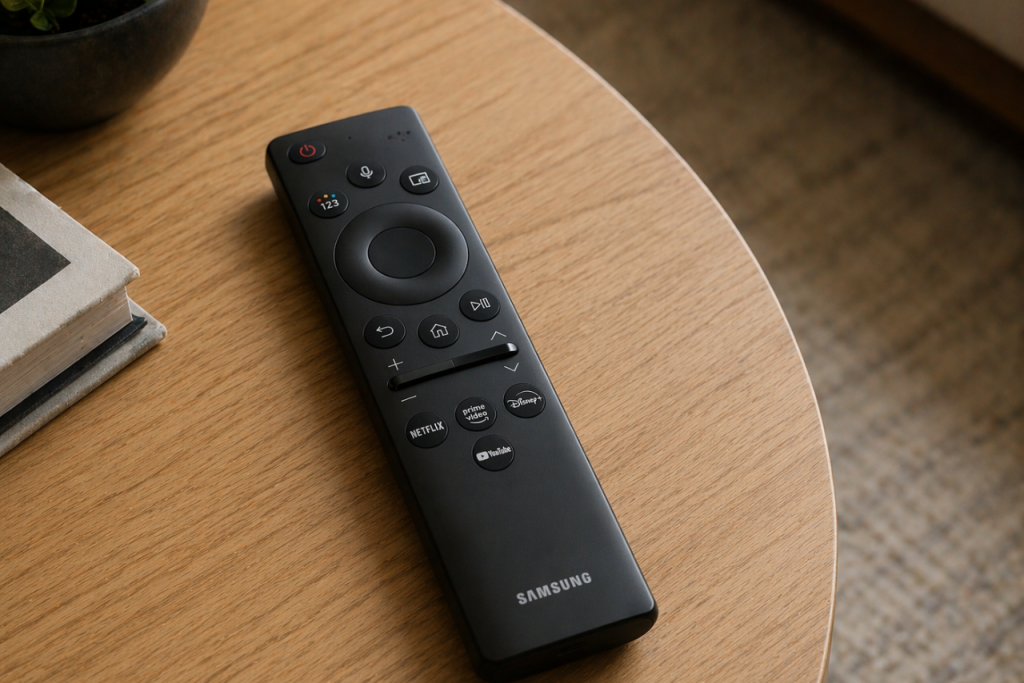
The 65Q7F pairs one of Samsung’s best innovations in the last decade: the Solar Cell remote control. Surprisingly, this clicker comes without a dedicated input button and a backlit face, but it makes up for it with a solar-powered, rechargeable battery and an intuitive design. You’ll never have to manually charge this remote, and even if you need to in a pinch, its built-in USB-C port takes away the problem.
It gets a few Vision AI features and even has an AI button on the remote that interacts with the content you’re watching.
The sound isn’t anything to write home about; you’d even find it mediocre if you’ve been around Samsung’s high-end TVs, but you have to remember that the Q7F’s price range reflects the compromises made here.
Alternatives
If you’re upgrading from an older TV and want something modern, smart, and large without spending too much, the Samsung 65Q7F is a reasonable choice.
However, if you can stretch your budget, stepping up to:
- Samsung Q8F – Better brightness and contrast
- Samsung Neo QLED (QN85 series) – Mini-LED for superior HDR
- LG OLED (C5-series) – Perfect blacks and cinematic quality
Samsung 65Q7F Review: Verdict
For all its worth, you’ll find the Samsung 65Q7F QLED to be an okay TV, especially when you stack it against Samsung’s more premium model. In its own, it stands out as a good option for anyone looking to upgrade to a QLED TV without breaking the bank. Remember, Samsung – or even LG and Sony – step-up models rarely start this cheap, even when they’re entry-level models.
It’s also a good QLED TV to buy as you hold on to upgrade to something a lot more premium in a few years – it will get the job done in the interim. For as long as you know clearly what you’re spending on, you won’t have many complaints when you buy the Samsung 65Q7F QLED TV.
Price Comparison


Affiliate Link Disclosure
In some of our articles and especially in our reviews, you will find affiliate links.For more information, you can read our full disclaimer.